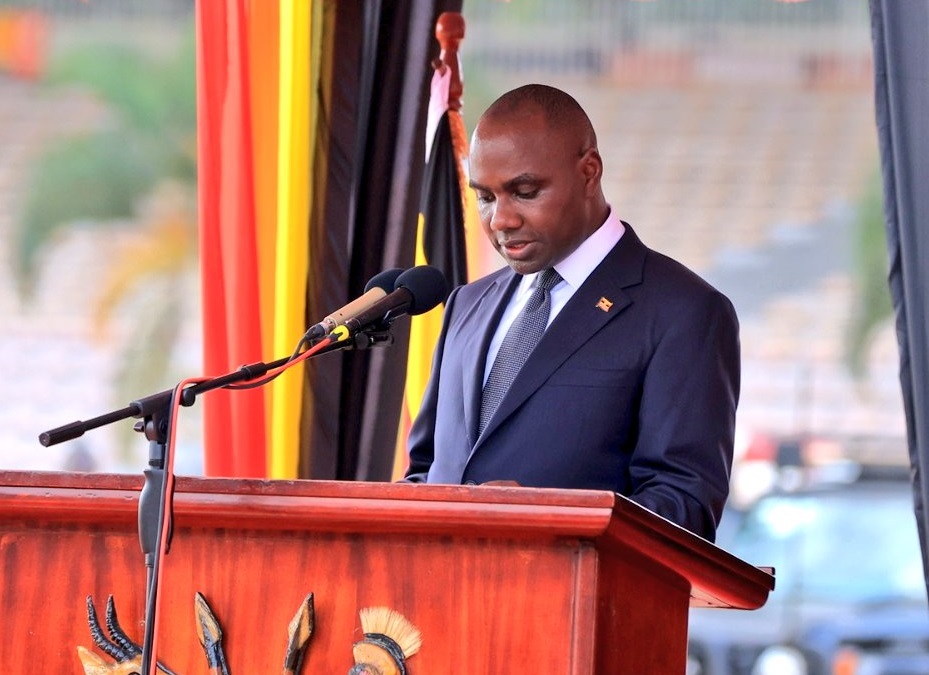

On a cool Thursday morning at Kololo Ceremonial Grounds, Hon. Henry Musasizi rose to read Uganda's most consequential budget in living memory. The numbers he announced - Shs 84.39 trillion in total expenditure, a projected 10.2 percent GDP growth rate, and the imminent arrival of the country's first commercial oil revenues - were not merely fiscal targets. They were, in the language of the Pearl of Africa's new economic doctrine, the opening moves of a tenfold transformation.
Shs 84.4T Budget FY 2026/27 | 10.2% GDP Growth Projected |
$500B Economy Target by 2040 | 10 New Boeing Aircraft Ordered |
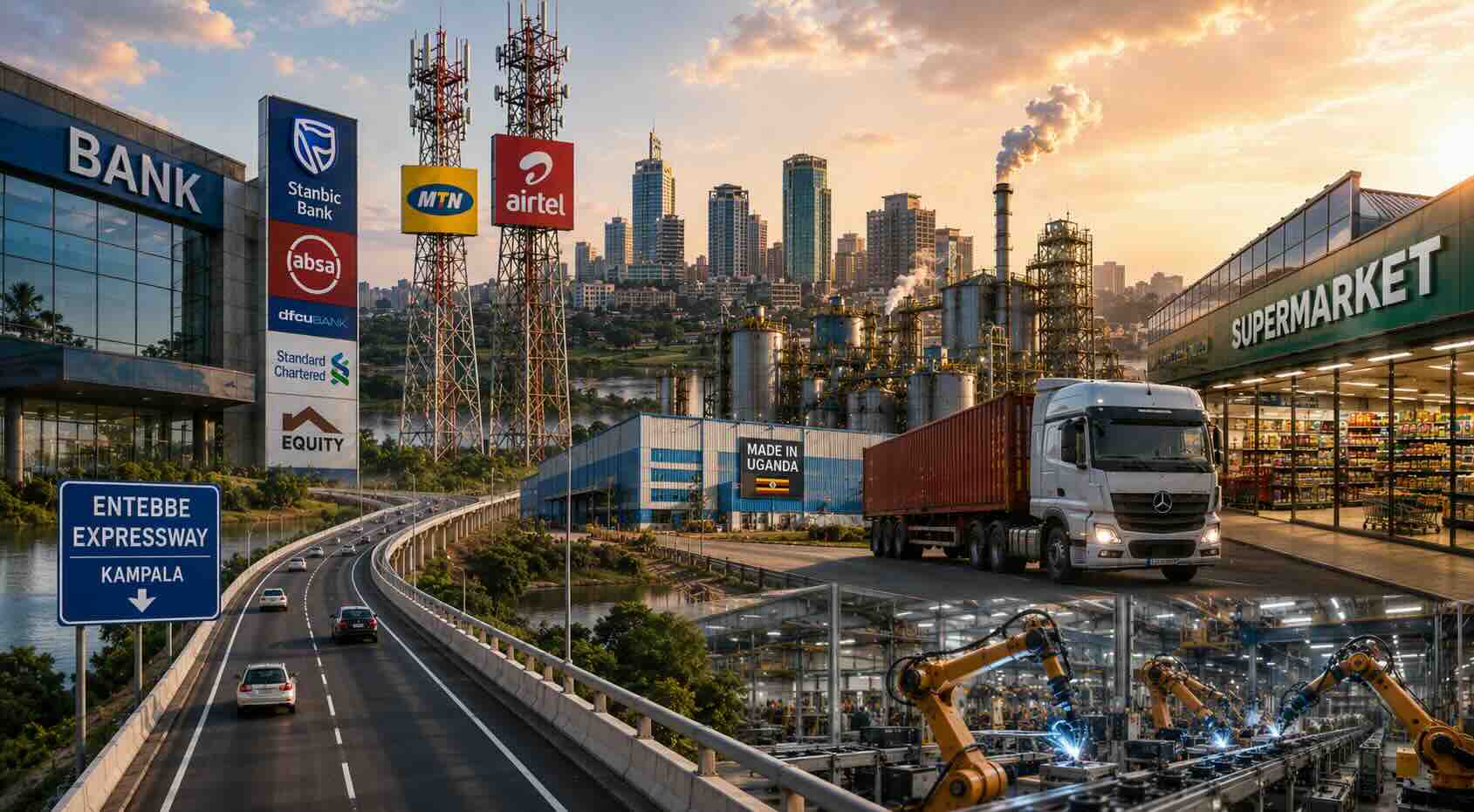
Uganda today sits at roughly $70 billion in GDP. The ambition, encoded in the government's Tenfold Growth Strategy, is to reach $500 billion by 2040. That is not a rounding error. It is a national reinvention from a landlocked subsistence economy to an industrialised, oil-exporting, innovation-driven powerhouse. And if the FY 2026/2027 budget is any guide, the government intends to pursue it with a seriousness that previous budgets only gestured at.
"This is Uganda's first return to double-digit growth since the structural reforms of the 1990s."
— Hon. Henry Musasizi, Minister of State for Finance
The Oil Moment
Black Gold, Finally Flowing
For two decades, Uganda's oil sat beneath Lake Albert like a promise deferred. Engineering surveys confirmed the reserves. Deals were signed, then renegotiated. Pipelines were proposed, then stalled. The joke in Kampala's financial circles was that Uganda would be the only country to discover oil and grow poorer from the anticipation of it.
That era is now definitively over. The Tilenga project led by TotalEnergies and the Kingfisher development operated by CNOOC are both moving toward first production. Together, the two flagship fields are expected to deliver a combined peak output of 230,000 to 240,000 barrels per day, with production potentially sustained for over 25 years. The FY 2026/2027 budget already earmarks Shs 1.44 trillion in petroleum revenues - a modest opening figure that will multiply dramatically as fields ramp up.
1.4 – 1.65B
Technically recoverable barrels in Uganda's oil fields, drawn from total in-place reserves of 6.3 to 6.65 billion barrels. If managed prudently, this resource base could generate revenues over a generation.
Crucially, President Museveni has been explicit that petroleum earnings will not become a consumption fund. They will be channelled into infrastructure - railways, roads, and pipelines — that lower the cost of doing business across all sectors. The strategic logic is sound: Uganda's landlocked geography has historically added a 30 to 40 percent freight premium onto every manufactured good. Eliminate that penalty, and the economics of industrialisation change completely.
In a further sign of long-term thinking, the Uganda National Oil Company has acquired a 20.15 percent stake in the Kenya Pipeline Company, securing Uganda's access to the primary fuel transit corridor from Mombasa. With over 95 percent of the country's refined petroleum imports moving through that corridor, the investment converts a dependency into a strategic asset.
Transport Revolution
Steel Rails and Jet Engines: The Infrastructure Surge
Nothing captures Uganda's ambition quite like the twin spectacles of the past week: on one end, a $2.9 billion Standard Gauge Railway breaking ground from Malaba toward Kampala; on the other, President Museveni presiding over the signing of a Shs 3.7 trillion agreement with Boeing for ten new aircraft.
The Standard Gauge Railway is, by any measure, the most transformative infrastructure project in Uganda's post-independence history. The 272-kilometre first phase, awarded to Turkish construction firm Yapi Merkezi, is the opening segment of what will ultimately stretch 1,724 kilometres — linking Uganda not just to the Kenyan port of Mombasa, but onward to Rwanda, the Democratic Republic of Congo, and South Sudan. The full network carries a price tag of $12.8 billion. The economic logic is compelling: shipping a 40-foot container by road from Mombasa to Kampala currently costs $3,500. By rail, that figure drops to $1,500 and the transit time falls from fourteen days to one. That is not a marginal improvement; it is the difference between a competitive and an uncompetitive manufacturing base.
2024
Turnkey contract signed
Yapi Merkezi of Turkey awarded the first SGR phase. Surveys, design work, and logistics camp establishment begin immediately.
2026
Construction commences
Ground broken on the Malaba–Kampala corridor. Kenya and Uganda jointly launch the broader Naivasha–Malaba–Kampala extension in a ceremony in Kisumu.
2030
First phase expected complete
Officials project four years to completion. The line is forecast to move 30 million tonnes of cargo annually upon opening.
2040
Full 1,724km network
Connecting Uganda to four neighbouring countries and positioning Kampala as the inland logistics hub of East and Central Africa.
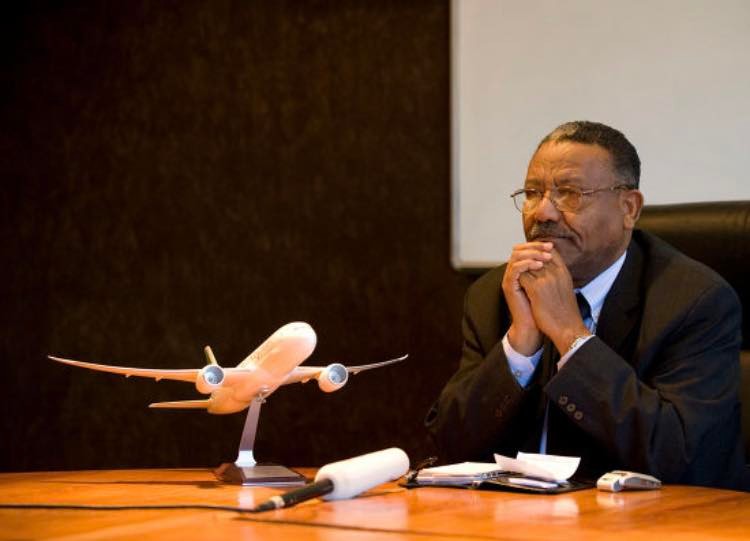
Then there are the planes. Uganda Airlines' agreement with Boeing for eight passenger aircraft and two cargo freighters — a Boeing 767 wide-body converted freighter and a Boeing 737 Converted Freighter — signals a carrier with serious continental ambitions. The expanded fleet is designed to increase capacity on regional, continental, and international routes simultaneously, while the cargo configuration directly supports Uganda's push to export processed goods rather than raw commodities. Tourism revenue, already at $1.86 billion in 2025 following a strong post-pandemic recovery, stands to benefit enormously from increased air connectivity.
The FY 2026/2027 budget allocates Shs 10.8 trillion to infrastructure development broadly — roads, railways, water, and transport systems — making it the third largest expenditure category after debt servicing and human capital development. Within that envelope, the metre-gauge railway is also receiving rehabilitation funding, providing a working freight spine while the SGR construction proceeds.
The ATMS Strategy
Four Pillars, One Economy
Uganda's Tenfold Growth Strategy does not rest on oil alone. The government has architected a four-pillar framework — Agro-Industrialisation, Tourism, Mineral-based industrial development, and Science, Technology and Innovation — which it refers to collectively as ATMS. The FY 2026/2027 budget directs Shs 5.21 trillion specifically toward these priorities, with each pillar assigned distinct targets and measurable outcomes.
Agro-IndustrialisationIrrigation systems, post-harvest infrastructure, agro-processing, and the commercialisation of innovations including an indigenous anti-tick vaccine. The shift is from exporting raw beans and cotton to exporting packaged honey, roasted coffee, and processed flour. Shs 2.26T allocated | Tourism DevelopmentFollowing the $1.86B earnings milestone of 2025, investment targets infrastructure around national parks, the "Explore Uganda" global marketing campaign, and incentives for longer stays and higher visitor spend. The stated goal is a fivefold increase in tourist arrivals. Budget support confirmed |
Mineral-Based IndustryBeyond oil, Uganda holds significant deposits of gold, tin, and iron. New beneficiation and training centres are being established in Busia, Karamoja, Ntungamo, and Fort Portal. The programme is projected to generate up to $25 billion in annual mineral earnings by 2045. $25B target by 2045 | Science, Technology & InnovationShs 1.14 trillion funds the commercialisation of Kiira Motors' electric vehicles — which have already attracted a 820-bus order from South Africa — digital infrastructure expansion, vaccine development, and Uganda's nascent space science programme. Shs 1.14T allocated |
The Kiira Motors story deserves particular attention. Built on a public university campus in Jinja, Uganda's electric vehicle project has evolved from an academic showcase into a genuine export proposition. The South African order for 820 electric buses represents exactly the kind of high-value, high-employment manufacturing the Tenfold Strategy envisions — and it demonstrates that Uganda can compete in technology sectors that most observers would have considered implausible a decade ago.
"A 40-foot container from Mombasa to Kampala by road costs $3,500. By rail it will cost $1,500 and take one day. That is why we are working for the Standard Gauge Railway — to lower the costs of doing business."
— President Yoweri Kaguta Museveni
The Human Engine
People as the Foundation of Growth
A sophisticated growth strategy means little if the people meant to execute it remain trapped in subsistence. The budget allocates Shs 13.56 trillion to human capital development — health, water, sanitation, and education — the second largest expenditure envelope after statutory obligations. Embedded within that figure is a phased 25 percent salary enhancement for teachers: a signal that the government understands education quality, not merely school construction, as the variable that matters.
The Parish Development Model, which channels revolving funds directly to Uganda's 10,589 parishes, has now disbursed Shs 4.4 trillion in total. Minister Musasizi cited improvements in household incomes and food security among programme beneficiaries, and reaffirmed the government's target of drawing the remaining 33 percent of Ugandans still in subsistence into the money economy. The budget allocates Shs 2.5 trillion to wealth creation programmes including PDM, Emyooga, and youth enterprise initiatives.
The AFCON 2027 budget line — Shs 496.3 billion for tournament preparations — sits within the education, skills, and sports envelope of Shs 6.66 trillion. It is easy to dismiss as vanity spending. But experience across Africa suggests that major sporting tournaments, when managed well, generate durable infrastructure, media visibility, and tourism dividends that outlast the final whistle by years.
The Accountability Compact
Money In, Money Out: The Governance Test
Uganda's leadership has always been better at announcing growth targets than at matching them with institutional discipline. The FY 2026/2027 budget attempts to address this directly. All Accounting Officers will be required to sign a Budget Discipline and Accountability Charter, with explicit sanctions for breaches in planning, budgeting, and the execution of public funds. Whether this mechanism has real teeth remains to be tested — but its inclusion in the budget speech reflects at least a rhetorical acknowledgement of where past plans have come undone.
On the financing side, the government's decision to fund 52 percent of the budget from domestic revenue — Shs 44.18 trillion — and reduce reliance on external budget support marks a genuine structural shift. External project support of Shs 11.27 trillion remains significant, but the direction of travel is toward fiscal self-sufficiency. Domestic borrowing of Shs 11.97 trillion carries its own risks, particularly for the private sector's cost of credit. But with oil revenues expected to expand the fiscal envelope substantially over the coming years, the pressure should ease.
The independent assessments are cautious but not dismissive. The Bank of Uganda's governor described oil revenues as "potentially transformative if managed prudently." The IMF's fiscal team has highlighted the need for broadened tax compliance and domestic resource mobilisation to align resources with long-term development goals. Oxfam's Uganda office has called for strong governance and transparent fiscal management as preconditions for realising the oil dividend. None of these observers doubt the potential. All of them circle the same question: will the institutions hold?
30 years
Uganda has not posted double-digit GDP growth since the structural reforms of the 1990s. The FY 2026/2027 projection of 10.2 percent, if realised, would mark a generational milestone — one that this budget is designed, in every sector from aviation to agriculture, to make permanent.
There is a version of Uganda in 2040 that looks something like a quieter, greener Singapore — an inland logistics hub where manufactured goods move by fast rail to Mombasa, where processed coffee and packaged honey fill Boeing freighters bound for London and Dubai, where electric buses made in Jinja ply the streets of Johannesburg, and where the oil money has been transformed, quietly and carefully, into schools and hospitals and roads rather than evaporating into offshore accounts.
That version of Uganda is not inevitable. But for the first time in a long time, it is genuinely plausible. The money is there. The plans are detailed. The steel is in the ground. What remains is the harder work — the daily, undramatic, unglamorous discipline of a nation delivering on its own promises to itself.
The Pearl of Africa has placed its bet. The table is set. The game is on.