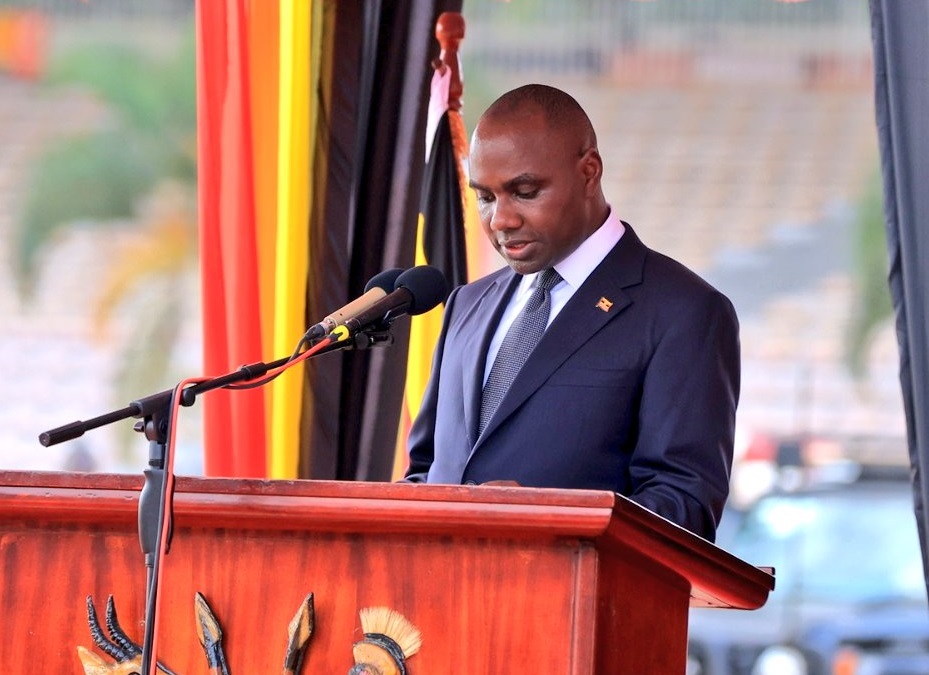
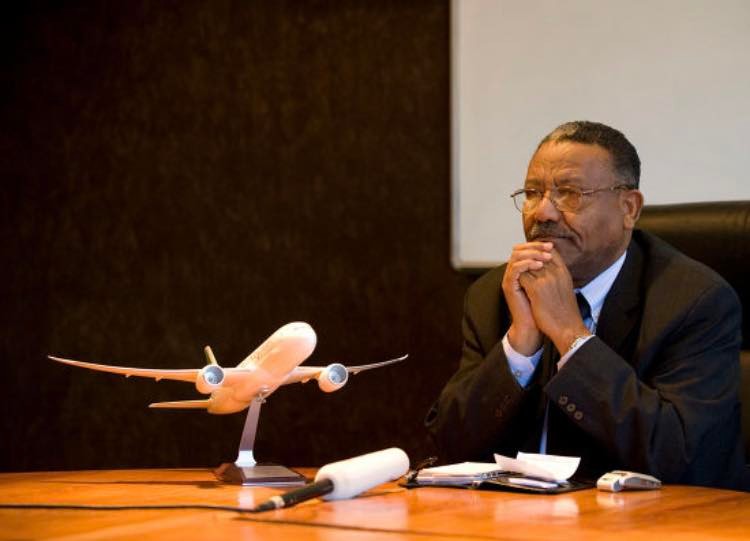

When Uganda Airlines' acting Chief Executive Officer, Ato Girma Wake, sat down on Capital Gang this past Saturday, he did not offer the polished, guarded answers Ugandans have come to expect from national institutions under pressure. Instead, he offered something rarer: a candid, confident account of an airline in transition — one that is still fixing real problems, but is doing so with a clear plan and a leader who has done this before.
Six months into his tenure, Wake has already put a mark on the airline that matches the scale of the ambition Uganda has long held for its national carrier.
Growth Beyond the Regional Map
Uganda Airlines' network is expanding with intent, not just enthusiasm. Kigali and Accra have joined the route map this year, extending the airline's reach from the heart of the East African Community into West Africa's gateway markets — moves designed to feed traffic into a growing continental network rather than stand alone as vanity routes. Wake has been explicit that this is deliberate: build volume on connected markets first and let natural demand justify standalone frequencies later, as is planned for Ghana and Nigeria.
Beyond the near term, government backing for a fleet renewal programme — eight new Boeing aircraft, including 737s for regional and continental work and 787 Dreamliners for long-haul routes, plus dedicated freighters — signals that this expansion has capital behind it, not just intent. Wake has been careful to frame this correctly: those aircraft won't arrive until the early 2030s and what the airline does in the years between now and then is what will determine whether the investment pays off.
A Fair Question of Scale
One of the more striking points Wake raised on Capital Gang was about scale and perspective. Emirates alone carries roughly 100 million passengers a year — a figure that dwarfs the population of its home city of Dubai many times over. It is a useful reminder that a country the size of Uganda, or a young airline built from scratch, should not be measured against carriers that have spent decades building global networks and hub economies around themselves. Many travellers connecting through Addis Ababa on their way elsewhere never even set foot outside the airport — a reflection of how transit hubs work, not proof that Entebbe cannot become one of its own.
Comparisons between Uganda Airlines and Ethiopian Airlines, in particular, deserve more nuance than they typically get. Ethiopian Airlines has had many decades to build its network, its hub infrastructure and its fleet economics. Uganda Airlines, relaunched only in 2019, is still in its first real decade of operation. Judging the two on the same curve was never a fair test — and Wake's point lands because it reframes the conversation around what reasonable progress actually looks like for a young carrier.
Homegrown Talent, Not Imported Dependency
Wake has also pushed back on the assumption that Uganda Airlines must lean permanently on foreign expertise to function. Uganda already has capable local pilots and technicians — the task, as he frames it, is building the systems and discipline around that talent, not importing a workforce from scratch. That is a meaningfully different diagnosis of the airline's problems than the one often assumed and it points toward a more sustainable, homegrown path to reliability.
Fixing the Narrative, Not Just the Fleet
Perhaps the most important theme from Wake's appearance was about communication. He argued that accurate, proactive media relations should guide how the airline tells its own story — and that Uganda's media should be more active partners in getting facts right, rather than passive recipients of whatever narrative fills the vacuum. Alongside that, he pointed to social media as a practical tool for managing the moments that matter most to passengers: communicating delays honestly, including the ones caused by factors entirely outside the airline's control, while working to keep those delays as short as possible in the first place.
That framing extends to a broader point Wake made about ownership. Uganda Airlines, he said, belongs to every Ugandan — not just the people who work there. Protecting its reputation is therefore a shared responsibility, not a task that falls solely on management or communications staff.
It is on this point that Wake was most direct and most concerned. He described a management team that has been deeply divided, admitting he still does not fully understand the roots of the dysfunction. He was blunt that some individuals within the organisation appear to be actively working against the airline's own image and name — a form of self-sabotage he called short-sighted, given what is at stake for the country as a whole.
A Leader Who Has Built This Before
What gives Wake's remarks weight is the résumé behind them. He led Ethiopian Airlines through its transformation into one of Africa's most respected and commercially successful carriers, later chairing both the Ethiopian Airlines Group and RwandAir's board. That is not theoretical experience — it is the record of someone who has taken a national carrier from struggling to standard-setting before, in a market with many of the same constraints Uganda Airlines faces today.
Wake has been careful, in his public remarks, not to overpromise. He has acknowledged that profitability remains a real challenge on some routes and that operational setbacks — including reduced capacity from a grounded aircraft fleet — have cost the airline revenue this year. But he has also said, plainly, that the airline's underlying potential is good: Uganda has the traffic base and the trainable talent to support a real airline and the current phase is about building the discipline and reliability that will let that potential show.
That combination — ambition backed by fleet orders and new routes, paired with a leader willing to name the airline's internal problems out loud — is what makes this moment feel different. Uganda Airlines is not pretending its challenges don't exist. It is naming them, in public and outlining a path past them. If the next two years go the way Wake has described, Entebbe's ambitions to become a genuine regional connecting hub will look a lot less like wishful thinking and a lot more like a plan already in motion.