
For most of the last century, Uganda's story in the world coffee trade has been a story of volume. Sacks of green beans, graded and bagged, shipped out under other people's labels, blended into other countries' brands. That story changed on June 25, 2026, when the Ugandan government stood on a stage in Brussels and gave the country's coffee something it has never formally had: a name of its own.
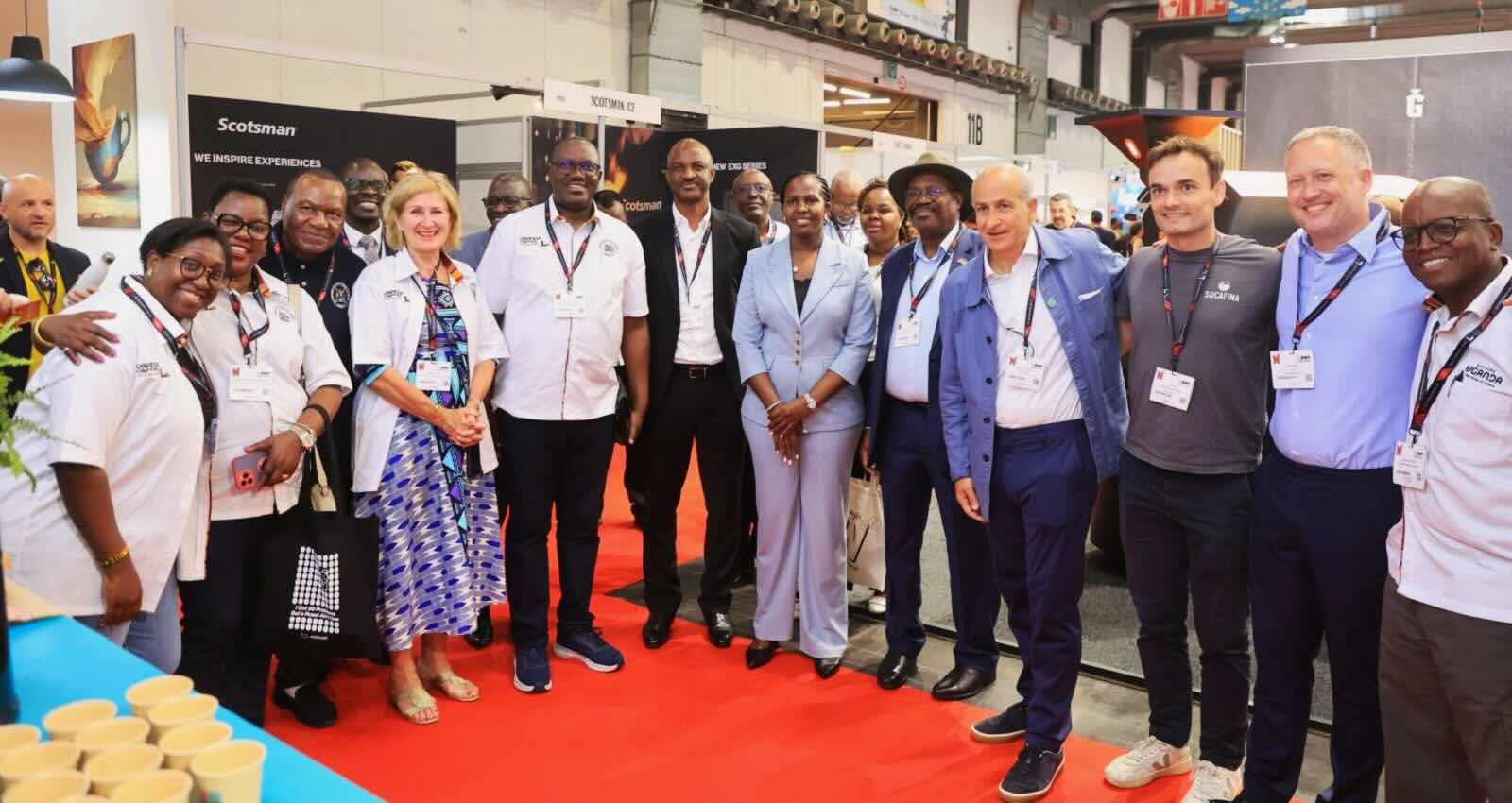
The brand is called Uganda Coffee: It's in Our Nature and it was unveiled at World of Coffee Brussels, one of the specialty coffee industry's largest global trade events, where Uganda held the prestigious position of Portrait Country — the event's featured nation for 2026. It is a deliberate, high-visibility bet that Uganda's next phase of coffee growth won't come primarily from planting more trees, but from convincing the world to pay more for the beans it already grows.
Why Brussels, Why Now
The choice of venue was not incidental. Brussels hosts both World of Coffee and the institutions of the European Union — historically Uganda's most important coffee trading partner. Uganda's Ambassador to Belgium, Mirjam Blaak Sow, framed the launch as a direct pitch to Europe's buyers, saying the event offered Uganda a platform to present its coffee story to the world's largest coffee-consuming market and to use the campaign to deepen trade ties and draw in investment.
The timing matters commercially too. Europe accounted for roughly 52 percent of Uganda's coffee exports by continent as of April 2026, with Italy and Germany remaining the country's leading destinations. But that European share has been gradually slipping as demand rises elsewhere in Africa and Asia — one of the pressures pushing Kampala to move faster on differentiation rather than compete purely on price and tonnage.
The Numbers Behind the Marketing
Strip away the branding language and the case for a rebrand is written plainly in Uganda's export data. In the twelve months to April 2026, the country shipped 8.78 million 60-kilogram bags of coffee worth roughly US$2.38 billion — a 22 percent jump in volume and a 23 percent rise in value over the prior year. That builds on an already remarkable run: in the twelve months to August 2025, Uganda exported about 7.93 million bags worth an estimated US$2.24 billion, itself a nearly 59 percent earnings increase on the year before.
Uganda has held the title of Africa's largest coffee exporter by volume for several years and it remains the birthplace of Robusta coffee — the hardier, higher-caffeine bean historically treated by global markets as the commodity workhorse to Arabica's premium cousin. What has changed is the quality story: Uganda has increasingly built a reputation for Fine Robusta and high-grade Arabica from regions like Mount Elgon, the Rwenzori range and West Nile, varieties that specialty roasters now actively seek out rather than treat as filler.
The strategic problem this rebrand is trying to solve is that none of that nuance has historically reached the end consumer. A bag of Ugandan beans could be roasted, packaged and sold in Milan or Hamburg with barely a mention of where it came from. Government officials argue that gap — between production quality and brand recognition — is where Uganda has been leaving money on the table.
What the Brand Actually Looks Like
The identity built around "It's in Our Nature" is more than a slogan. The wordmark weaves coffee beans directly into the lettering, paired with an emblem featuring Uganda's national bird, the Crested Crane — a symbol long associated with peace and pride. The palette draws from Uganda's flag colours — black, sunshine yellow and bright red — layered with coffee-world tones like forest green, caramel and espresso brown.
According to the campaign's messaging, "It's in Our Nature" is meant to work on two levels: literally, referencing Uganda's fertile volcanic soils, high altitude, water resources and biodiversity that make it well-suited to coffee farming; and figuratively, linking the crop to values the campaign associates with Ugandan communities — hospitality, resilience and trust. Organisers point to a genuine cultural anchor here: in many Ugandan traditions, coffee beans have historically been exchanged between families to seal bonds of reconciliation and friendship, giving the brand a story rooted in more than agronomy.
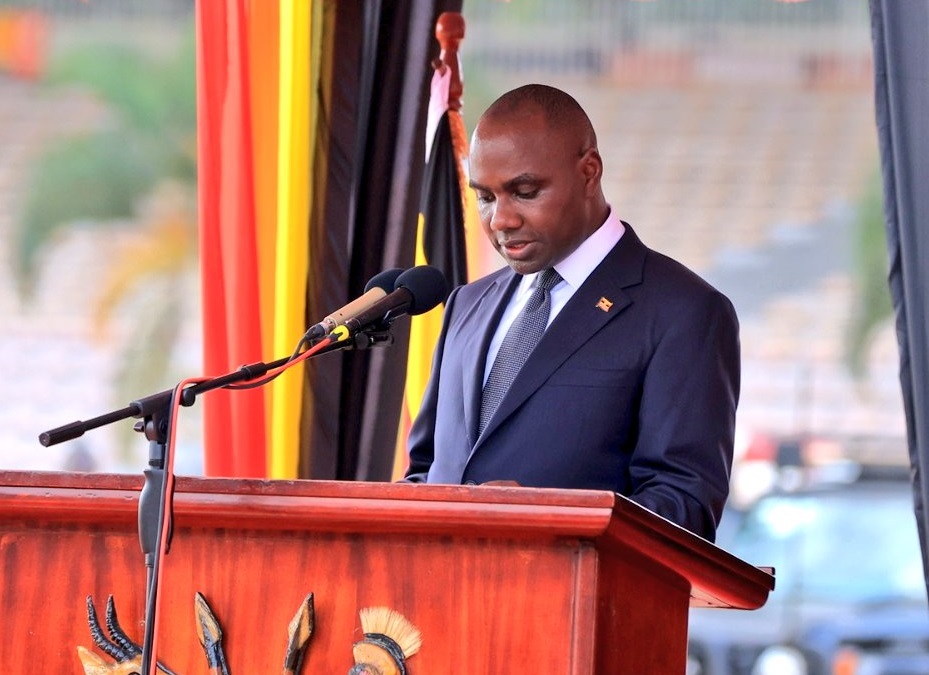
Minister of State for Agriculture Desire Muhooza tied the initiative directly to compliance pressure as well as ambition, noting that Uganda's coffee sector is working toward full compliance with the European Union's Deforestation Regulation (EUDR) as it pushes into European markets more aggressively — a regulatory reality that will shape which Ugandan coffee can even reach EU shelves in coming years, regardless of how well it's branded.
Money on the Table: The Sucafina Signal
Perhaps the clearest early sign that the rebrand is being read as more than marketing came from the sidelines of the Brussels launch itself. Uganda's delegation, working out of its exhibition booth alongside technical staff from the Uganda Coffee Development Authority (UCDA), held high-level meetings with executives from Sucafina, one of the world's largest coffee trading conglomerates and parent company of UGACOF, a major Uganda-based processing and export operation. Those conversations reportedly centred on scaling direct investment into Uganda's domestic processing capacity — exactly the kind of value-chain investment the government says the new brand is designed to attract, since it is processed, packaged and traceable coffee — not raw green beans — that captures the bulk of margin in the global market.
The Regional Race for Origin Prestige
Uganda is not moving in isolation. Neighbouring Tanzania beat it to the branding table, launching its own "Tully's Black Barista Kilimanjaro Coffee" identity in Japan in 2024, complete with prominent advertising at Tokyo's Shinjuku railway station. There have also been reports of Ugandan traders sourcing supplementary coffee from Tanzania's Kagera region across the border — a reminder that East Africa's coffee-origin countries are increasingly competing with and quietly leaning on, one another as global demand shifts.
That competitive backdrop is part of why Uganda's push feels urgent rather than ceremonial. Rising demand from Africa and Asia is cushioning exporters even as European buyers diversify their sourcing and origin countries that fail to build a distinct identity risk being treated as interchangeable suppliers in a market where buyers increasingly reward traceability and story alongside cup quality.
What Success Would Actually Look Like
If the rebrand works, the visible signs won't be in Brussels — they'll be in Ugandan farming districts and processing plants. Analysts and industry commentators following the launch point to a few concrete markers: growth in local roasting and packaging capacity rather than reliance on green bean exports; more direct contracts between Ugandan cooperatives and international roasters; and continued compliance with EU sustainability rules that increasingly gate access to premium markets.
The government's own framing leans on the words of President Yoweri Museveni, who has called coffee a "strategic national asset" — language officials have used to justify treating branding as a state priority rather than leaving it to individual exporters. Whether that ambition translates into higher farmgate prices for the smallholders who actually grow the beans, rather than just a more polished story for buyers abroad, will be the real test of whether "It's in Our Nature" becomes more than a well-designed logo.
Uganda Today will continue tracking the rollout of the Uganda Coffee brand, including its planned rollout across international exhibitions, digital campaigns and packaging over the coming trade seasons.