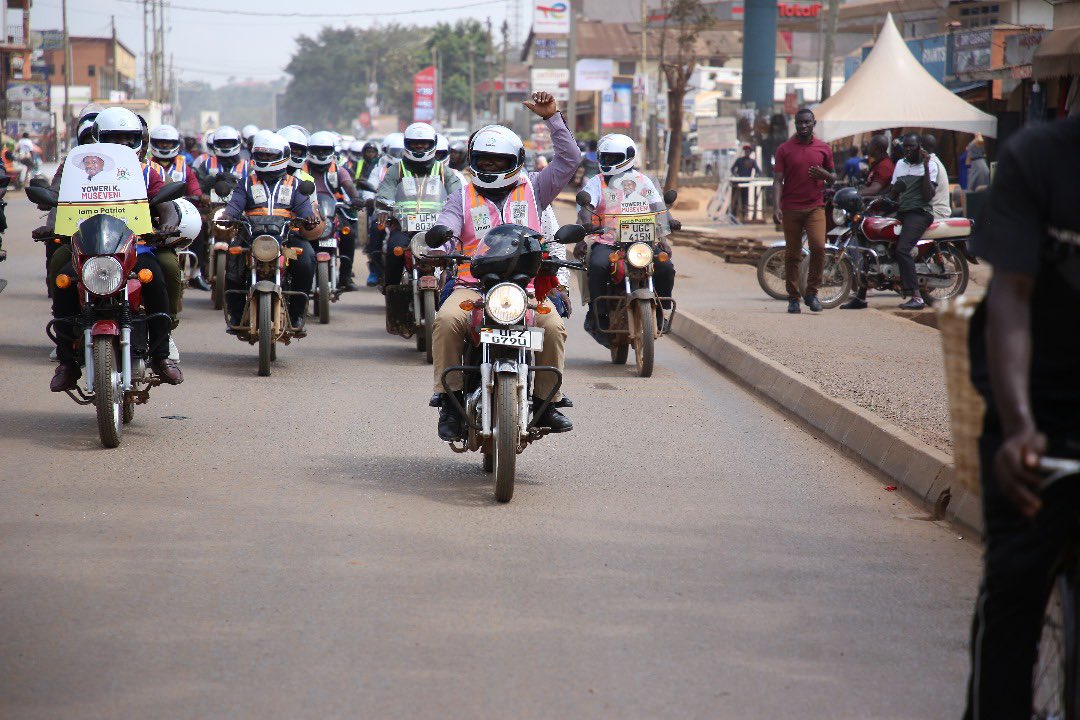

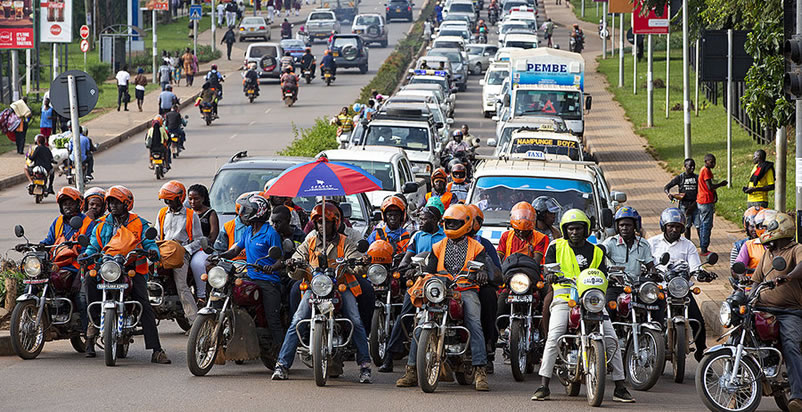
On any given morning in Kampala, the sound of the city waking up is inseparable from the buzz and roar of motorcycle engines. Tens of thousands of boda bodas weave through Nakasero, Kalerwe, Ntinda and Bwaise, ferrying office workers, market traders, school children and hospital patients through traffic that cars simply cannot navigate. The boda boda is not merely a transport option in Uganda — it is a lifeline, a livelihood and, for millions of people, the very engine of daily survival.
Now, quietly but unmistakably, that engine is going electric.
The clearest signal yet came in June 2026, when Spiro — an African electric mobility company with manufacturing operations in Uganda — announced a landmark $215 million (UGX 810.5 billion) equity investment from international institutional investors including Impact Fund Denmark and Equitane. The funding, one of the largest ever raised by an African clean-mobility company, is earmarked to expand battery-swapping infrastructure, grow manufacturing capacity and accelerate entry into new markets. Spiro already operates in Uganda, Kenya, Rwanda, Nigeria, Cameroon, Benin and Togo and is eyeing the Democratic Republic of Congo and Ethiopia next.
For Uganda, this is not distant news from a faraway boardroom. It is a story about jobs, fuel costs, clean air — and the future of an industry that employs an estimated two million people across the country.
The Boda Boda Economy: Uganda's Most Important Informal Sector
To understand what electrification means, you must first understand what the boda boda means.
The motorcycle taxi trade began modestly in the border towns of western Uganda — the name itself derives from "border to border" — before spreading rapidly across the country in the 1990s and 2000s as rural populations sought affordable transport and urban youth sought income. Today it is hard to overstate its scale. Kampala alone has hundreds of thousands of registered and unregistered riders. Across Uganda, bodas connect rural villages to health centres, markets, schools and economic opportunity. In a country where road infrastructure remains patchy and car ownership is beyond the reach of most households, the boda boda has become indispensable.
Economically, the sector is vast. Riders, mechanics, spare-parts traders, fuel sellers, helmet vendors and motorcycle dealers all depend on it. Banks and microfinance institutions have built entire loan products around it. The Uganda Revenue Authority draws significant tax revenue from it. Bajaj, Honda, TVS, Boxer and Lifan have built their Ugandan market strategies largely around it. The boda boda is, in every meaningful sense, Uganda's most consequential informal industry.
The Promise of Going Electric
Against this backdrop, the case for electric motorcycles is compelling — and the numbers from companies like Spiro make it hard to dismiss.
Riders using Spiro's electric motorcycles can cut daily operating costs by as much as 40 percent, saving up to $2 per daycompared to petrol-powered bikes. For a boda rider earning between UGX 20,000 and UGX 50,000 on a good day, that saving is not trivial — it is the difference between clearing a loan repayment and failing to, between feeding a family adequately and cutting back. Fuel prices in Uganda have been volatile and persistently high, partly because the country is landlocked and imports nearly all its petroleum products. Electric bikes, charged through swap stations rather than from the pump, insulate riders from that volatility in a way nothing previously available to them could.
The environmental case is equally striking. A lifecycle assessment conducted in Kenya found that Spiro's electric motorcycles produce roughly 72 percent less climate impact than petrol alternatives — equivalent to avoiding around 19 tonnes of carbon dioxide over a vehicle's lifetime. For Kampala, a city that regularly ranks among East Africa's most congested and polluted, the air-quality implications alone justify serious attention. Particulate matter from two-stroke and four-stroke petrol engines is a significant contributor to respiratory disease in dense urban areas. Electrification offers, among other things, cleaner lungs.
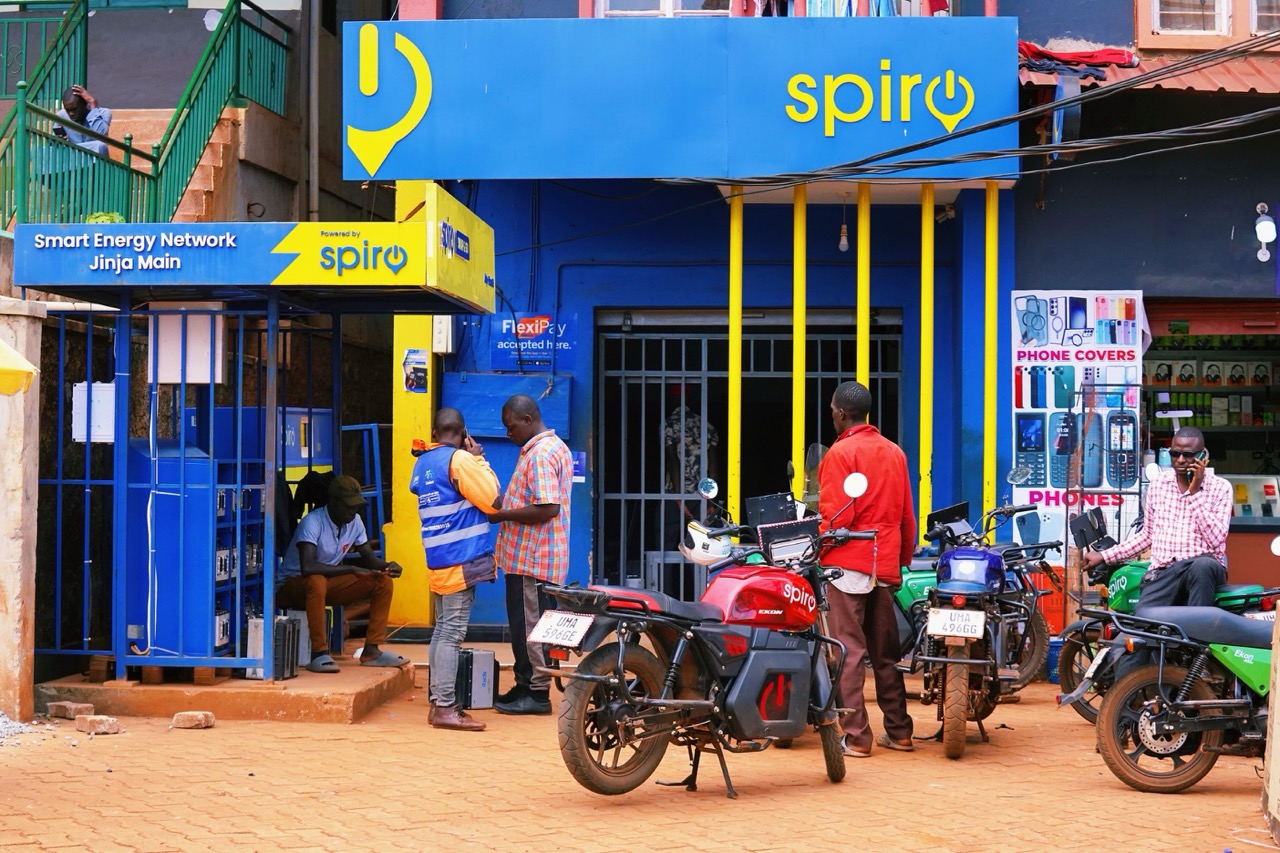
Battery-swapping — the model Spiro and others have adopted — is particularly well-suited to the Ugandan market. Rather than waiting for a battery to charge (which requires reliable electricity and hours of downtime), a rider pulls into a swap station and exchanges a depleted battery for a full one in minutes. Spiro says it has deployed over 2,500 battery-swapping stations and facilitated more than 30 million battery swaps across its markets. The model eliminates charging anxiety and keeps riders productive throughout the day.
Spiro also manufactures in Uganda — a detail of no small significance. Local assembly creates jobs, reduces import dependency and, over time, builds technical skills and industrial capacity that remain in the country. The company says it supports around 6,000 direct and indirect jobs across its markets. An expanding manufacturing footprint in Uganda could add meaningfully to that figure.
The Complications Nobody Should Ignore
The electric transition, for all its promise, is not without serious complications. Honesty demands that they be examined clearly.
The cost of entry remains a barrier. Electric motorcycles cost more upfront than their petrol equivalents. A Chinese-assembled petrol boda — the kind most commonly ridden in Uganda — can be acquired for between UGX 3 million and UGX 5 million, often on accessible hire-purchase terms offered by local dealers. Electric bikes, even with subsidies and financing schemes, currently sit at a higher price point. For a rider who is already indebted and operating on thin margins, the switch requires either trust in the financing model or a level of capital many do not have. E-mobility companies in Uganda have tried to bridge this gap with lease-to-own models, but uptake is still building.
Infrastructure is uneven. Battery-swapping works well where swap stations are dense. In Kampala and some district towns, the network is growing. But Uganda is a predominantly rural country and the further a rider operates from a major urban centre, the thinner the charging and swapping infrastructure becomes. A boda rider in Moroto or Bundibugyo cannot yet access the same electric ecosystem as one in Ntinda. Until the network reaches them, petrol remains the only viable fuel.
Grid reliability is a genuine concern. Swap stations need electricity to charge the batteries they lend out. Uganda's power grid, while expanding, remains unreliable in many areas. Load-shedding, transformer failures and connectivity gaps all affect station uptime. Spiro's investment in solar-powered swap stations addresses part of this problem — but the solar buildout takes time and the interim period carries real operational risk for riders who depend on the infrastructure.
Technical literacy and repair capacity lag behind. The Ugandan motorcycle repair ecosystem has been built over decades around petrol engines. Mechanics across the country know how to strip, rebuild and improvise fixes for a Bajaj Boxer or a Honda CG125. Electric drivetrains are fundamentally different — they require different diagnostic tools, different skills and different spare parts. As electric motorcycles proliferate, the absence of a trained repair workforce could leave riders stranded with faulty bikes and no one nearby who can fix them. Building that capacity takes years and deliberate investment.
Environmental questions about batteries themselves. Electric vehicles reduce emissions during use — but battery production and disposal carry their own environmental costs. Lithium and cobalt mining, much of it in the DRC, raises serious concerns about ecological damage and labour conditions. Battery disposal, if not managed carefully, introduces toxic materials into soil and water. Spiro operates a battery recycling facility in Nigeria, which is a start — but Uganda needs its own end-of-life infrastructure to ensure that the clean-mobility transition does not simply export one form of pollution while eliminating another.
What This Means for Bajaj, Honda and the Existing Motorcycle Industry
This is where the electric transition becomes genuinely disruptive — and where significant economic interests begin to feel the pressure.
Bajaj Auto has been the dominant force in Uganda's motorcycle market for well over a decade. The Boxer, the Discover and more recently the Pulsar have become synonymous with boda boda culture. Bajaj's success here is not accidental — the Indian manufacturer invested in dealer networks, spare parts distribution, local financing partnerships and after-sales service in ways that competitors did not. Honda, TVS, Lifan and various Chinese brands have carved out their own niches, but Bajaj has long been the default answer when a new rider asks what to buy.
These companies face a genuine strategic challenge. Their entire Ugandan business model — selling petrol motorcycles, stocking petrol engine spare parts and training petrol engine mechanics — is predicated on a world that electric mobility is slowly dismantling. It is not an immediate crisis: the transition will take years, possibly a decade or more, to reach the majority of Ugandan riders. But the trajectory is becoming clearer with every investment announcement like Spiro's $215 million raise.
Some conventional manufacturers have responded by developing their own electric lines. Bajaj launched the Chetak electric scooter in India and has electric motorcycle concepts in development. Honda has made global electric commitments. TVS has electric models. Whether any of these companies move aggressively into the Ugandan electric market — or whether the field is ceded to African-focused specialists like Spiro — will be one of the defining commercial contests of the next decade.
The spare-parts trade is equally exposed. Kampala's Kisekka Market and spare-parts corridors in towns across Uganda represent billions of shillings in inventory, infrastructure and expertise built entirely around petrol drivetrains. As electric motorcycles proliferate, demand for carburettors, pistons, fuel filters and exhaust systems will gradually decline. New supply chains — for batteries, controllers, motors and charging components — will need to be built in their place. That transition will displace some traders and create opportunities for others, but the disruption in between will be real and painful for those who do not adapt early.
Fuel retailers will feel it too. The roadside fuel kiosks that line Ugandan highways and serve boda riders throughout the day represent a significant distribution network for petroleum products. A steady shift toward electric bikes reduces their customer base. Some of these operators may pivot to become battery-swap points — a logical evolution — but it requires capital and a relationship with an EV operator that not everyone will easily secure.
The Policy Dimension
Uganda's government has signalled interest in electric mobility, partly because it reduces the foreign exchange drain from petroleum imports and partly because of international climate commitments. President Museveni has met with Spiro investors, signalling political endorsement. Tax incentives on electric vehicles and components have been part of recent budget discussions.
But policy coherence remains work in progress. Import duties, VAT treatment of EV components, standards for battery safety and road-worthiness certification all need clear frameworks. Rider registration and insurance systems designed for petrol bikes need to be updated. If the government is serious about leading this transition — rather than simply cheering it from the sidelines — it needs a comprehensive electric mobility policy that addresses infrastructure, financing access, technical training, battery disposal and consumer protection in one integrated framework.
A Transition Worth Managing Well
The electric boda boda is coming to Uganda. The $215 million pouring into Spiro is not an experiment — it is institutional capital betting on a specific future. That future has real benefits: cheaper daily operations for riders, cleaner air for cities, reduced petroleum dependency for the national economy and manufacturing jobs that stay on the continent.
But transitions of this scale rarely go smoothly for everyone. The riders who benefit most will be those with access to financing, swap infrastructure and information. Those in rural areas, those already deep in debt on petrol bikes and those whose livelihoods depend on the petrol supply chain will face harder choices.
The lesson of Uganda's boda boda economy is that informal sectors have an enormous capacity for adaptation — riders have navigated fuel price spikes, police crackdowns, licensing reforms and pandemic lockdowns and kept riding. Electric mobility is the next challenge. With the right support, most of them will navigate it too.
The roar of the engine is changing. The question is whether Uganda — its riders, its policymakers, its businesses and its investors — is ready to manage that change in a way that leaves no one behind.
This article draws on reporting from CEO East Africa Magazine and broader analysis of Uganda's motorcycle and transport sectors.