Graphic design has weathered technological upheavals before — the shift from hand-lettering to desktop publishing, the move from print-first to digital-first thinking. But the current wave, driven by generative AI, is different in kind, not just degree. It doesn't just change the tools designers use; it changes what design work actually consists of. Here's a look at how that shift is playing out and where it's likely to take the profession next.
From Execution to Direction
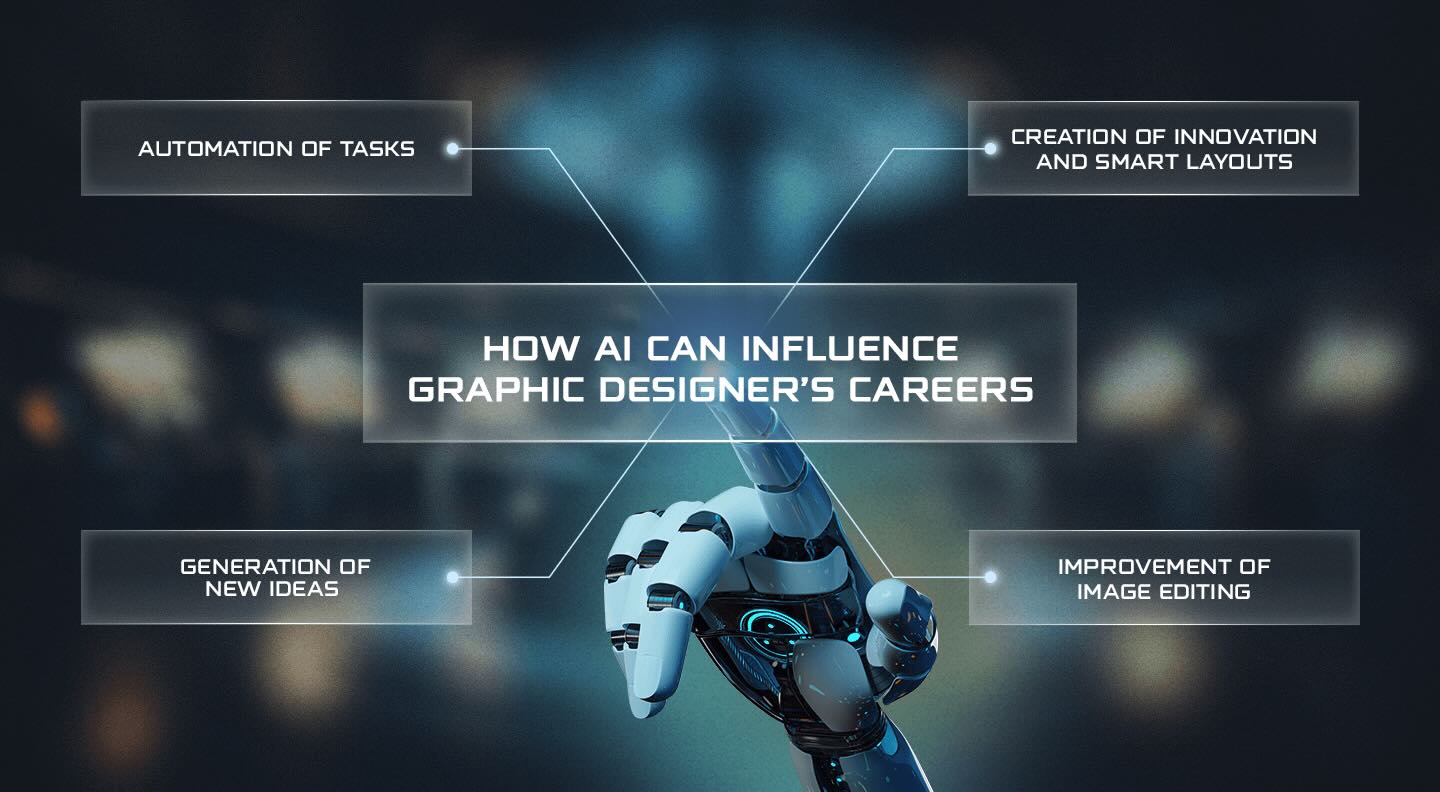
For decades, a designer's value was measured partly by craft: how precisely they could crop, color-correct, kern and composite. AI tools have absorbed much of that mechanical labor. Layout generation, background removal, resizing across formats, even first-draft concepting — tasks that used to eat up a workday now take minutes.
The result is a quiet but significant repositioning of the job itself. Designers are spending less time executing a vision and more time defining one — setting creative direction, making judgment calls about tone and audience and curating AI output rather than producing every pixel by hand. The designers thriving in this environment aren't the ones resisting the tools; they're the ones who've become fluent art directors of AI systems.
New Roles Are Emerging, Not Just Disappearing
It's tempting to frame this shift purely as displacement and there's real truth to that concern — production-heavy, low-differentiation work is genuinely at risk. But the more complete picture includes a set of roles that didn't exist a few years ago:
AI-integration specialists, who build and fine-tune design workflows around generative tools rather than using them as a novelty
Data-informed designers, who pair aesthetic judgment with audience analytics to make design decisions defensible, not just intuitive
Hybrid creative-technical roles, sitting at the intersection of design, UX research and engineering, where the ability to speak both languages is the actual asset
The throughline is that value is migrating from how something is made to why it was made that way — and that "why" is much harder for AI to supply on its own.
Competitive Pressure Cuts Both Ways
For freelancers and small studios, AI-powered platforms have lowered the price floor for basic design services and that competitive pressure is real. But the same tools that create that pressure also let small operators punch above their weight — producing more polished work, faster, at a fraction of the previous cost. Agencies are increasingly using AI not to replace their teams but to compress revision cycles, prototype faster and free up senior talent for the strategic work clients actually pay a premium for.
Creativity Is Being Redefined, Not Replaced
One of the more interesting shifts is philosophical rather than practical: the boundary between "hand-made" and "machine-assisted" design is dissolving and the profession hasn't fully settled on what that means for authorship and originality. Tools that generate imagery from a prompt are increasingly treated less like a shortcut and more like a collaborator — a way to rapidly explore visual territory a designer wouldn't have reached alone.
That said, this raises real questions the field is still working through: what counts as a designer's own voice when a model trained on millions of other people's work is doing part of the generating? Expect this tension — between augmentation and authenticity — to be one of the defining debates of the next several years, not something that gets resolved quietly in the background.
The Ethical Stakes Are Rising, Not Shrinking
As AI takes on a larger share of content generation, designers are increasingly the last line of defense against the biases baked into these systems — stereotyped representations, exclusionary defaults, homogenized aesthetics that flatten cultural nuance. That's a responsibility that didn't exist in the same form when every image was made by a human being who could be asked "why did you make that choice?" Going forward, ethical fluency — understanding how these systems can go wrong and catching it before it ships — looks less like a nice-to-have and more like a core professional competency, on par with typography or color theory.
What This Means for the Next Five to Ten Years
Putting these threads together, a few things seem likely:
Junior-level production work will keep shrinking as an entry point. The traditional path of starting a career on rote execution tasks is narrowing, which means design education and early-career mentorship will need to emphasize direction, critique and strategy much earlier than they used to.
"Designer" will increasingly mean "creative technologist." Fluency with AI tools will stop being a differentiator and become table stakes, the way basic Photoshop skills did a generation ago.
The premium will shift decisively toward taste, judgment and accountability. Anyone can generate a passable image in seconds. What remains scarce — and valuable — is the ability to know which of a hundred AI-generated options is actually right for the brief, the brand and the audience and to take responsibility for that call.
Access to the profession will broaden, for better and worse. AI is lowering the barrier for people without formal training to produce competent design work, which is genuinely democratizing — but it also means professional designers will need to articulate more clearly what expertise adds beyond what a template and a prompt can deliver.
The profession isn't disappearing. It's being pulled, sometimes uncomfortably, toward a version of itself that looks less like craftsmanship-as-labor and more like craftsmanship-as-judgment. Designers who lean into that — who treat AI as an instrument for creative range rather than a threat to relevance — are likely to find the next decade full of opportunity, not just disruption.
Want this turned into a downloadable file — a Word doc or a formatted PDF, for instance?