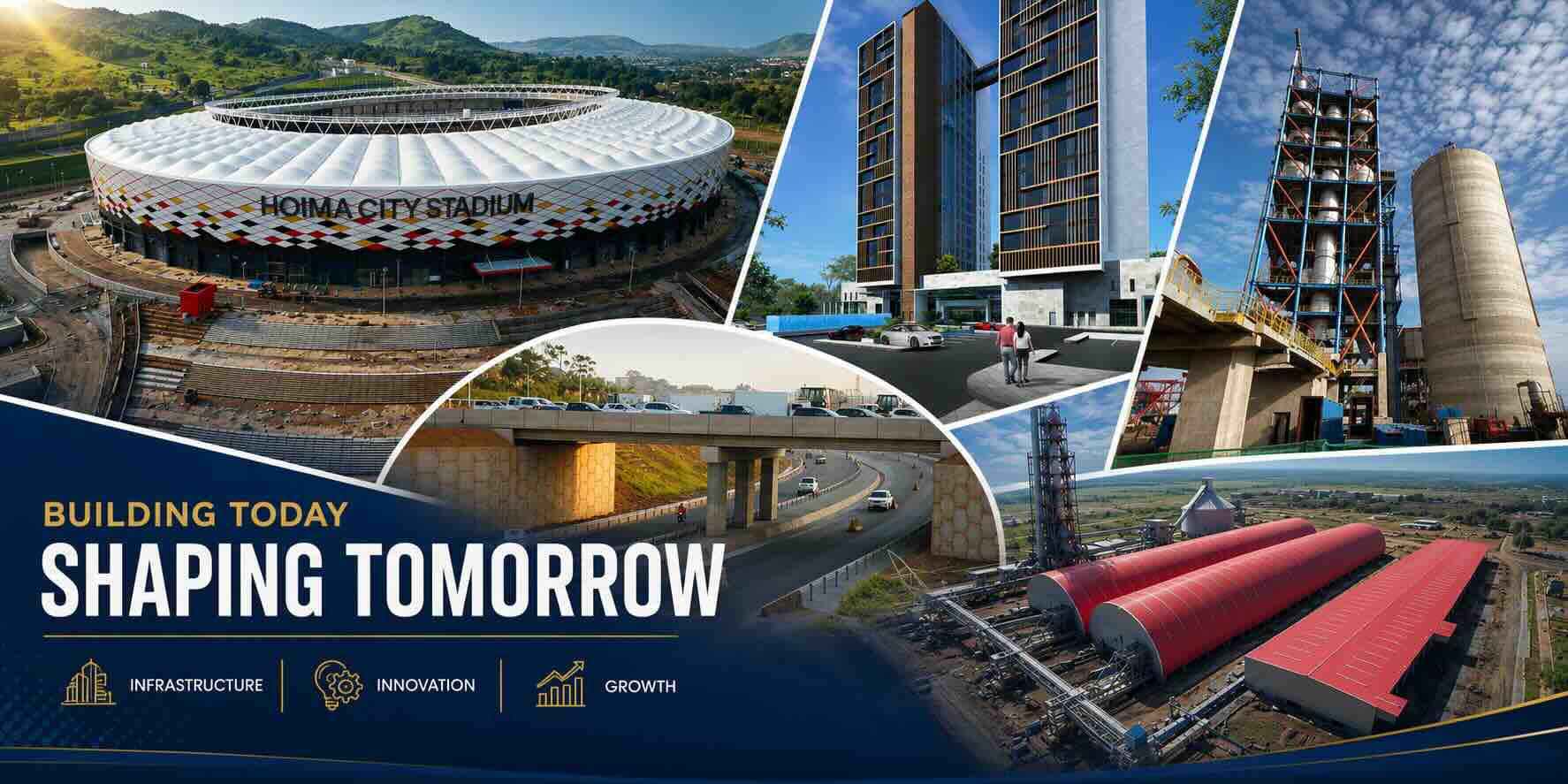

Drive along the Kampala–Jinja corridor today and you will pass surveyors' pegs, earth-movers and the first outlines of a toll road that will one day carry trucks and travelers in a fraction of today's time. Fly north over Karenga and you will see the graded strip that will become Kidepo International Airport. Stand on the shores of Lake Albert and you will hear the hum of machinery building the pipeline that will carry Uganda's crude to the coast.
Uganda is, without question, in the middle of the most ambitious building programme in its modern history. But a nation is not measured only by the cranes on its skyline. It is measured by what happens in the years after the ribbon is cut — whether a rural mother in Karamoja can reach a hospital in time, whether a graduate in Gulu finds a job in the industrial park down the road, whether a fisherman on Lake Albert shares in the prosperity flowing past his village on a new highway.
This is the story of that second, quieter transformation: the human development dividend that mega-projects must deliver if Uganda's Vision 2040 is to mean something in the lives of ordinary citizens, not just in economic bulletins.
The Infrastructure-to-Livelihood Pipeline
Economists who study infrastructure-led growth are consistent on one point: roads and railways do not automatically create shared prosperity. They create the conditions for it. What determines whether a mega-project becomes a genuine dividend for citizens is a second layer of investment — in skills, in local business linkages, in health and education systems that can absorb and multiply the gains.
Mega-Project | Direct Output | Human Dividend, If Well-Managed | Risk If Neglected |
|---|---|---|---|
EACOP & Oil Fields (Albertine Graben) | Crude oil exports, industrial park | Local content jobs, supplier contracts for Ugandan SMEs, skilled technical workforce | Enclave economy benefiting few; environmental and land disputes |
Standard Gauge Railway | Cheaper, faster freight | Lower food and goods prices nationwide; new logistics jobs in Iganga and along the route | Debt burden without matching revenue growth |
Kampala–Jinja Expressway | Reduced transit time | New businesses along the corridor; growth in Mukono and Buikwe | Displacement of communities without adequate resettlement |
Kidepo & Hoima Airports | Tourism and cargo access | Karamoja and Bunyoro tourism jobs; youth employment in hospitality | Benefits concentrated in urban enclaves, not surrounding villages |
Karamoja Mining & Industrial Parks | Cement, marble, gold value-addition | Local employment, reduced regional inequality | Resource extraction without local processing or fair royalties |
National Electricity Expansion | Wider grid access | Home-based enterprise, better schooling (lighting, ICT), reduced firewood dependence | Connections without affordability leave rural households out |
The pattern is clear: every one of Uganda's flagship projects carries within it two futures — one where the gains stay close to the investment site and one where they ripple outward into the everyday lives of Ugandans in Kaabong, Kanungu, or Kalangala alike. The difference lies in the choices made now, while these projects are still under construction.
Voices From the Ground
"When they told us the airport was coming to Karenga, some people thought it was just for tourists to fly in and out. But I keep asking — what about our children? Will there be a technical school so a boy from Kidepo can be the one fixing the runway lights, not someone flown in from Kampala?" — A local council leader in Karenga District
"We have seen roads pass through our sub-county before and nothing changed for us. This time we want to see the industrial park at Namanve buying our maize and our sunflower, not just South Korean steel and Chinese cement." — A farmers' cooperative chairperson, Wakiso District
"Electricity reached my workshop two years ago. Now I run three sewing machines and I have trained five young people. That is what these big projects should be doing — multiplying, not just switching on a bulb and leaving." — A tailor and small business owner, Lira
These are not isolated sentiments. They capture a consistent theme emerging from communities near Uganda's mega-projects: cautious hope, tempered by memory of past promises that did not fully translate into local prosperity.
Five Pillars of a Genuine Human Dividend
For Uganda's infrastructure boom to become a true national transformation rather than a collection of impressive structures, development analysts point to five interlocking priorities.
1. Local Content With Teeth
Uganda's local content laws in the oil and gas sector are among the most ambitious in East Africa on paper. The dividend will be measured by how many Ugandan-owned firms — not just Ugandan employees of foreign firms — win contracts in catering, transport, welding and logistics along EACOP, the SGR and the expressways.
2. Skilling Ahead of Construction, Not After
Technical and vocational institutes near Hoima, Karenga, Lira and Iganga need to graduate welders, electricians, hospitality staff and rail technicians before the demand peaks, not scrambling to catch up once foreign contractors have already filled the gap.
3. Health and Education Infrastructure That Keeps Pace
A new expressway is of little comfort to a family without a functioning health centre. Every mega-project corridor should carry with it a matching investment in clinics, maternity wards and secondary schools, so that population growth around new economic hubs does not outstrip basic services.
4. Land Rights and Fair Resettlement
From the pipeline route through Buliisa to expressway land acquisition in Mukono, how Uganda treats displaced families will define the moral character of this development era as much as any GDP figure.
5. Transparent, Trackable Benefit-Sharing
Citizens increasingly ask not just "what is being built" but "who benefits and how do we know." Public dashboards on jobs created, local contracts awarded and revenue allocated to host communities would go a long way toward converting scepticism into shared ownership.
What Success Could Look Like by 2031
Indicator | Today (2026) | Aspiration by 2031 |
|---|---|---|
Grid electricity access | Rising steadily under national expansion programmes | Majority of rural households connected and able to afford power |
Karamoja regional income gap | Among the widest in the country | Narrowing, driven by mining value-addition and tourism jobs |
Local content in oil & gas contracts | Growing, with active Ugandan supplier registration | Ugandan firms as first-choice suppliers across the value chain |
Youth employment in mega-project corridors | Concentrated in construction-phase labour | Diversified into permanent technical, logistics and service jobs |
Health facility access near new infrastructure corridors | Uneven | Matched investment in clinics and schools alongside roads and rail |
A Nation Building Two Things at Once
Uganda's engineers are pouring concrete for expressways, rail lines and runways. But there is a second, less visible construction project underway — one measured not in kilometres of tarmac or megawatts of power, but in the number of Ugandan children who finish school near a new industrial park, the number of local firms that win a contract instead of watching one pass them by and the number of families who can say the road that reached their village also reached their lives.
The mega-projects will, in time, be finished. Bridges will be commissioned, railways will carry their first cargo, stadiums will host their first roaring crowds during AFCON 2027. But the deeper achievement — the one history will judge most carefully — is whether this generation of infrastructure became the floor beneath a more prosperous, more equal Uganda, or simply an impressive backdrop to inequality that persisted regardless.
That is the real project. And it is still being built, decision by decision, in ministries, district offices and construction sites across the country — not by cement and steel alone, but by the choices made about who gets to share in what is being built.
This article reflects analysis and community perspectives on Uganda's ongoing national infrastructure programme. Names of individuals quoted have been withheld or generalized to protect privacy.